
 Pl
Pl Ru
Ru Uk
Uk
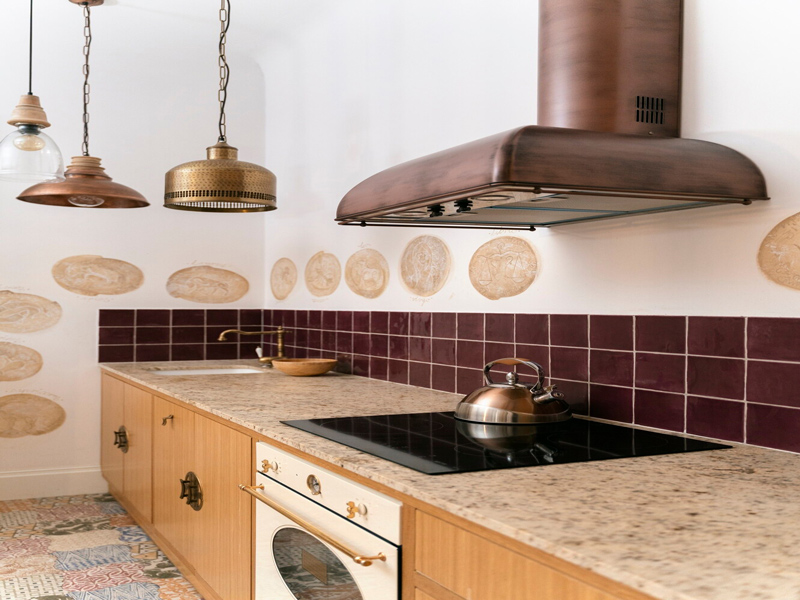
Effective extraction of heat, grease, and cooking odors in a professional kitchen directly depends on the precise geometry of the ventilation equipment. Standard off-the-shelf factory units rarely fit complex floor plans seamlessly or fully cover non-standard cooklines. A custom-built commercial kitchen exhaust hood accommodates all architectural nuances and specific cooking appliance layouts, ensuring complete capture of airborne contaminants.
When Does a Restaurant Kitchen Need a Custom-Designed Exhaust Hood?
Bespoke engineering is often the only viable solution when opening a restaurant in a historic building, a converted industrial facility, or any space featuring complex structural wall layouts, beams, and low ceilings. Standard units in such environments either create capture blind spots—allowing odors and smoke to spill into dining areas—or occupy valuable vertical clearance, hindering staff workflow.
A professional custom-sized commercial exhaust hood is essential when operating high-output island chargrills, Josper ovens, solid-fuel pizza ovens, or extensive continuous cooking suites. A custom project allows engineers to calculate precise canopy overhang dimensions, hood depth, exhaust spigot configurations, and connection duct sizing to ensure optimal airflow integration with primary ventilation risers.
Custom-Engineered Hood Types Tailored to Client Specifications
A professional approach to hot cookline configuration requires a thorough spatial analysis of all cooking equipment. Expert specification of custom-made catering exhaust hoods enables the fabrication of virtually any structural profile: tapered, box-type rectangular, beveled corner geometries, or reduced-height profiles for low-clearance ceilings.
Depending on equipment placement, engineers design specialized modifications:
- Custom wall-mounted commercial exhaust hoods, tailored to wrap around wall projections, columns, and narrow structural niches.
- Extended-depth island canopy hoods, designed for central, multi-row cooking islands with intensive steam and thermal plume emissions.
- Compensating (make-up air) supply-exhaust hoods with customized perforated distribution faces for targeted, draft-free supply of fresh tempered air directly to the chef’s station.
This structural versatility meets the demands of any commercial kitchen, regardless of architectural complexity. Precision-tailored sizing eliminates capture dead zones and maintains consistent face capture velocity across the entire hood perimeter.
High-Grade AISI 304 / 430 Stainless Steel Construction
Fabricating non-standard ventilation equipment requires durable materials engineered to endure demanding commercial environments. For custom-built stainless steel exhaust hoods, manufacturers utilize heavy-gauge stainless steel: grade AISI 304 (recommended for high-humidity areas, combi-steamers, and acidic cooking environments) or AISI 430 (for standard dry hot lines). In custom builds, steel sheet thickness is specified with structural safety margins to prevent canopy vibration during peak exhaust fan loads.
All seams on custom canopies are TIG-welded in an inert shielding gas atmosphere and smoothly dressed. This guarantees total weld hermeticity, preventing captured grease and oils from dripping back onto cooking appliances while maintaining full compliance with strict food industry hygiene standards.
Critical Factors in Custom Exhaust Hood Engineering and Site Measurement
Developing bespoke commercial ventilation begins with exhaustive site surveys and engineering analysis. The site engineer evaluates:
- the overall length and width of the cooking equipment line;
- the vertical working height of the thermal appliances relative to finished floor level;
- the primary energy source (natural gas, electricity, or solid fuels).
Particular focus is placed on existing structural elements: load-bearing columns, concrete beams, utility risers, and existing ventilation shafts.
Hood profile calculations account for the natural expansion angle of thermal plumes rising from cooktop appliances. These values determine the necessary hood overhang beyond appliance footprints (typically a minimum of 100–150 mm on each exposed side) and establish the required quantity of baffle grease filters to preserve optimal static pressure drop and airflow balance.
Turnkey Project Execution for Custom Hoods by EUROMED-BUD
Delivering non-standard mechanical solutions requires strict quality control across every milestone—from initial shop drawings to final commissioning. EUROMED-BUD provides a complete turnkey service, engineering every installation in compliance with current building codes, fire regulations, and individual client requirements. Professional installation of commercial kitchen ventilation in Warsaw by our specialists eliminates duct integration errors and guarantees seamless system operation.
Our custom manufacturing and installation workflow covers:
- On-site laser surveys to capture exact three-dimensional spatial parameters.
- HVAC engineering documentation, isometric drafting, and precise airflow calculations.
- Precision sheet metal fabrication utilizing CNC bending, laser cutting, and robotic TIG welding.
- Jobsite delivery, structural suspension, and airtight integration into main ventilation ductwork.
Following mechanical completion, our technicians carry out mandatory aerodynamic testing and air balancing. This validates specified capture velocities and provides restaurant owners with certified commissioning documentation required for Sanepid authority inspections.
Benefits of Custom Commercial Kitchen Exhaust Hoods by EUROMED-BUD
Investing in custom-engineered extraction systems safeguards long-term efficiency and operational safety in your culinary business. Custom-sized commercial kitchen exhaust hoods guarantee an exact fit on site, avoiding expensive site rework on duct routes or alterations to interior layouts. Our engineering team manages the complete lifecycle—from concept and mechanical drafting to commissioning and preventative maintenance.
Our extraction equipment is fitted with high-efficiency stainless steel baffle grease filters, integrated perimeter grease troughs with drain taps/removable collection cups, and moisture-sealed LED task lighting. We design every canopy for straightforward daily sanitation, optimized airflow rates, and quiet acoustic performance. The result is a modern food service kitchen that easily passes environmental health and fire safety audits.
The primary advantage of choosing EUROMED-BUD is our comprehensive warranty on all fabrication and installation work. We stand firmly behind the durability, workmanship, and aerodynamic performance of our systems.
Schedule an Engineering Site Survey and Installation Quote
Avoid smoke accumulation, grease migration, and regulatory hurdles during your venue opening by partnering with EUROMED-BUD. Our engineering specialists focus on commercial food service HVAC systems and understand the critical nuances of kitchen airflow design.
Contact us today to book an on-site engineer survey via our online contact form or phone lines. We will quickly draft technical layouts, calculate exact ventilation volumes, and provide a transparent, detailed commercial estimate tailored to your kitchen architecture and budget.
Frequently Asked Questions (FAQ)
How long does the entire cycle take—from site survey to final installation?
On average, the lead time for a custom-built exhaust hood—including site measurement, mechanical design, and factory fabrication—ranges between 7 and 14 business days. Exact lead times depend on geometric complexity, whether integrated supply air plenums are required, and current manufacturing queue volumes. On-site installation typically completes within a single working day. Close coordination between engineers and assembly crews ensures ventilation installation proceeds smoothly alongside other interior fit-out trades without delays. Timelines are finalized and agreed upon prior to project kickoff.
Why are standard off-the-shelf hoods often inadequate for commercial kitchens?
Comparing standard off-the-shelf hoods with custom-sized units reveals critical differences in capture coverage. Factory catalog models feature rigid, standardized dimensional increments. If cooking equipment extends just 5 cm beyond the hood canopy perimeter, thermal plumes and aerosolized grease escape past the filters, staining ceilings, walls, and leaking into customer seating areas. Custom manufacturing eliminates this defect. Bespoke canopies match the thermal footprint with millimeter accuracy, guaranteeing clean indoor air.
Can you engineer and install custom canopies for high-output chargrills or Josper ovens?
Yes, custom exhaust hoods for solid-fuel grills and charcoal ovens are engineered specifically to withstand extreme flue gas temperatures and heavy spark loads. These canopies are built exclusively from heavy-gauge AISI 304 stainless steel and are equipped with integrated wet scrubbers (hydro-filters) or certified mechanical spark-arrestor cassettes. This specification is crucial for commercial fire compliance, preventing grease deposits inside exhaust ductwork from igniting due to airborne embers. Our engineers integrate all applicable fire prevention codes and technical standards throughout design and installation.
Why Choose EUROMED–BUD

of services
Quality assurance
Creation of individual projects.
Recommendations in the selection of materials


Order a project
- Free site visit and consultation
- Recommendations from experienced professionals
- Selection of quality materials
- Optimization of the budget for implementation

About us
- Full cycle of works and engineering control. When one organization does everything, customers are calmer!
- Quick cost calculation. We spend 30% less client time than the industry average.
- We maintain the high quality and reliability of services. Examples of specific objects already put into operation.


- The use of not new-fangled expensive materials, but proven and profitable solutions. Guaranties for all types of work!
- Fixed cost of services, which will not change! Drawing up estimates and signing the contract before starting work.
- Lack of random people in the team. We have very smart guys working for us, and they become even smarter every year.
How do we work?

We accept an application and contact the customer

We draw up an estimate and agree on the cost

We approve the work schedule and sign the contract

We deliver materials and get to work

We clean up after ourselves and put the object into operation
Do you have any further questions?

- If you have any questions, please feel free to write or call us. If you do not receive an immediate response, your application is being processed.
- We maintain constant contact with our clients and customers. It is possible to contact various divisions of the company by e-mail or by phone.
- Information about all our promotions and discounts is posted on social networks. Please follow us so you don't miss anything!
 Telegram
 Whatsapp